What Are Yoga Styles? A Guide to Hatha, Vinyasa & Power Yoga
Published September 20, 2026 · Elham Jamshidian
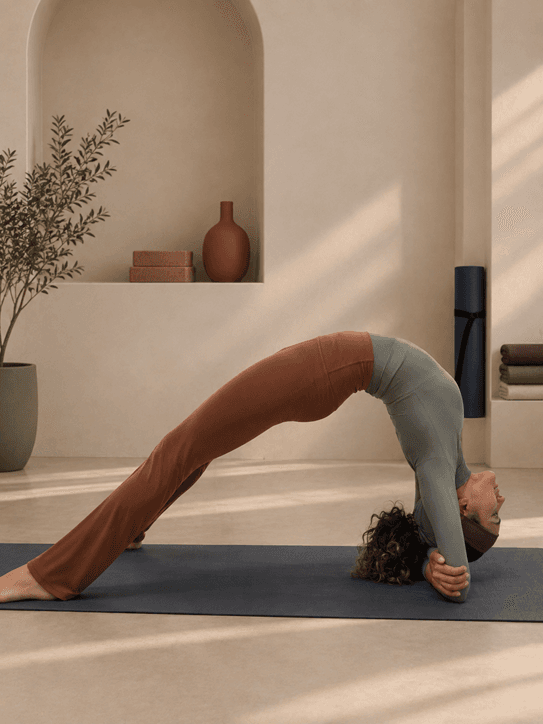
If you’re new to yoga, you’ve probably seen a long list of names: Hatha, Vinyasa, Power, Yin, Ashtanga, Restorative — enough to feel more like spells than a workout plan.
The differences aren’t that complicated.
Each style offers a different relationship between movement, breath, body, and mind. Some classes are slower and body-aware, some are dynamic, and some focus more on releasing tension.
In this article we’ll look at the main styles and help you sense which one might fit you best.
What is Hatha Yoga?
Hatha Yoga is one of the best-known approaches and often combines physical postures, breathwork, and body awareness.
In a Hatha class, movements usually happen at a more controlled pace, so there’s more room to notice alignment, breath, and how each pose feels. That’s why it can be a strong starting point if you want solid foundations.
A typical Hatha class may include:
- Yoga postures and shapes
- Breath practices or pranayama
- Focus and body awareness
- Softening and rest
Who is Hatha Yoga for?
If you’re starting out, want to learn poses patiently, or feel your body needs a real pause during the day, Hatha can be a good entry point.
What is Vinyasa Yoga?
Vinyasa Yoga is a more dynamic style where movement and breath stay linked.
You often flow from one pose to the next, and breath sets the rhythm — which is why it’s also called Flow Yoga.
Sequences aren’t fixed. A teacher can shape the flow around the theme, the room, and the goal of practice.
Vinyasa can support strength and stamina, mobility, breath–movement coordination, and sharper body awareness.
“Vinyasa” doesn’t automatically mean hard. Intensity depends on the teacher, the sequence, and who’s in the room.
Who is Vinyasa Yoga for?
If you don’t love repetitive routines and want more movement through class, Vinyasa can feel engaging.
What is Power Yoga?
Power Yoga is usually more physical and dynamic, and sits close to the Vinyasa family.
There’s often more emphasis on strength, stamina, continuous movement, and physical challenge. Classes can vary a lot depending on the teacher and level.
You might meet standing poses, balances, core work, and energetic sequences.
One important note: Power Yoga isn’t a competition. You don’t need to prove how strong or flexible you are. Intensity should match your body that day.
Who is Power Yoga for?
If you like more vigorous practice and want to build strength and stamina alongside breath awareness, Power Yoga can be a fit.
What’s the difference between Hatha, Vinyasa, and Power?
In simple terms:
| Style | Pace | Main focus | Good for |
|---|---|---|---|
| Hatha Yoga | Calm to moderate | Body awareness, breath, clear poses | Beginners and mindful practice |
| Vinyasa Yoga | Moderate to dynamic | Linking breath and movement | People who like movement and variety |
| Power Yoga | Dynamic and challenging | Strength, stamina, movement | People who want a more physical practice |
This table isn’t a hard rule. Intensity shifts with the teacher, the plan, and the room. Two Vinyasa classes can feel completely different.
Which yoga style is right for me?
Instead of asking “What’s the best style?”, ask: What do I want from practice right now?
If you want a calmer pace, to learn foundations, and to meet your body more clearly, start with Hatha.
If you want breath and movement in a continuous flow and enjoy variety, try Vinyasa.
If you want something more physical and want to build strength and stamina, Power Yoga is another option.
And if you’re unsure, you don’t have to decide forever in the first class. Trying a few styles — and noticing how you feel before and after — is a simple way to find your fit.
Do I need to be flexible to start yoga?
No. That’s one of the most common misunderstandings.
Yoga isn’t a prize for people who can put a foot behind their head. The goal isn’t to force advanced shapes on day one.
If your body feels stiff, that’s exactly the body you practice with.
If you sit at a desk for hours, live in meetings, or carry a lot of mental load, regular yoga may help more than you expect.
What matters is practice that meets your current level and deepens your relationship with your own body — not comparison.
Yoga is more than shapes on the mat
The longer you practice, the clearer it becomes that yoga isn’t only about how a pose looks.
Breath, attention, and presence are part of the experience too.
You might do a few simple movements and suddenly notice how tight your shoulders are, how shallow your breath has been all day, or that you stayed in the moment for a few minutes without jumping ahead.
Those small notices can be a big part of yoga.
That’s why, for me, yoga isn’t only exercise — it’s a chance, in a busy life, to come back to your body, breath, and yourself.
Online yoga can be part of your routine
If commuting is hard or your schedule is full, online yoga can make practice easier to keep.
Online sessions can be private or group.
In private class, practice can follow your needs, level, and goals more closely.
In group class, you practice with others without travel time.
If you’re looking for an online teacher, choose someone who can explain, adjust, and guide to your level — not only demonstrate poses.
If you’re in Tehran, you can practice in person
For those who prefer a shared space, in-person yoga in Tehran offers direct guidance and a clear practice container.
Being with a teacher in the room can help you understand your body, refine form, and feel the energy of a group class.
If you’re still unsure which style fits, learn about class structure, level, and style before you choose.
Closing: which style should you choose?
No style is “best” for everyone.
Some days you may need calm Hatha; other days a lively Vinyasa. In one season Power Yoga might call you; in another, soft breath-focused practice.
The right style is the one that matches your body, life, and current intention.
Yoga shouldn’t become one more item on your to-do list.
It’s a few moments to step out of “just keep going” and notice how your body, breath, and self actually feel.
Ready to begin? Choose among Hatha, Vinyasa, and Power — or start from home with a private or group online class.